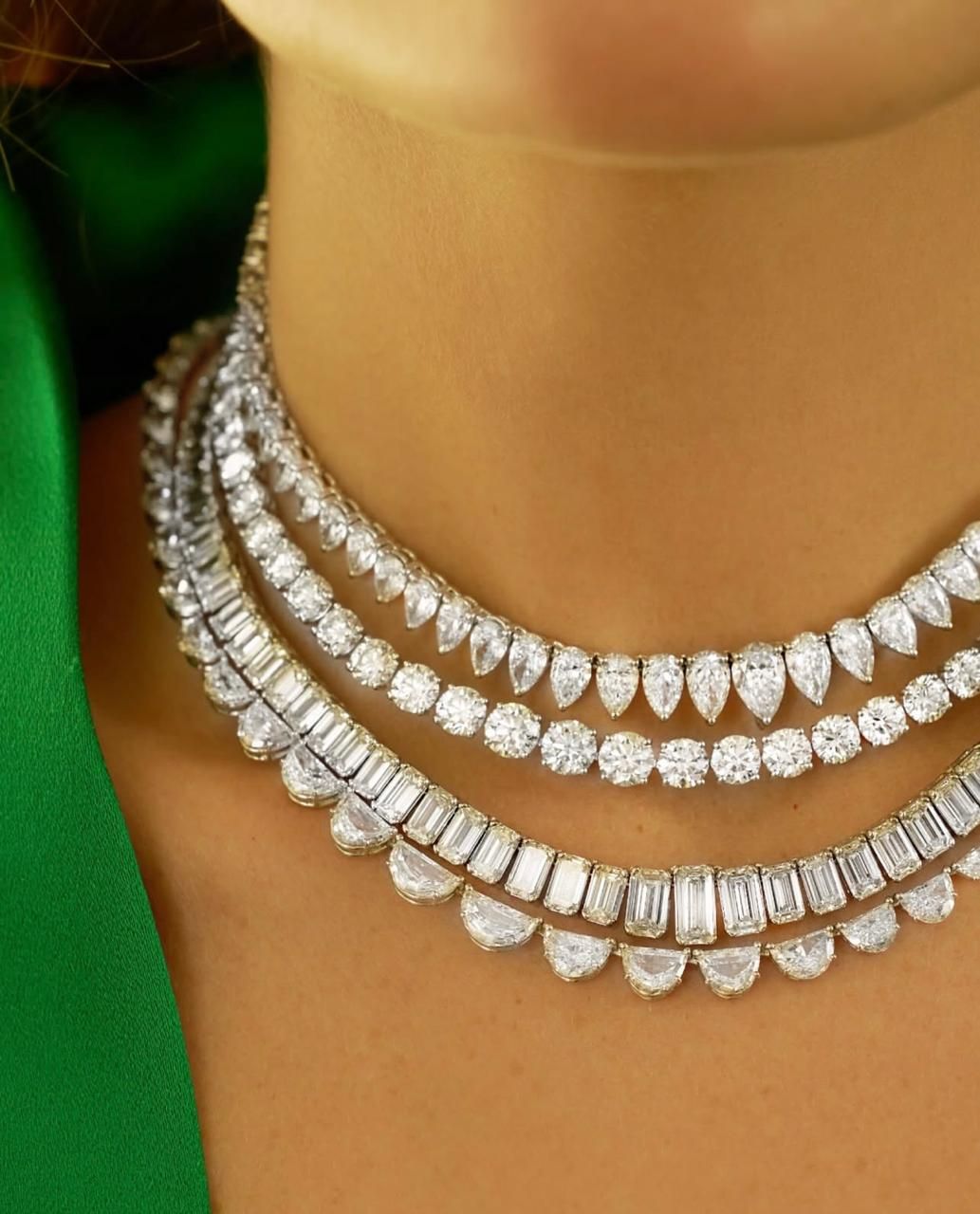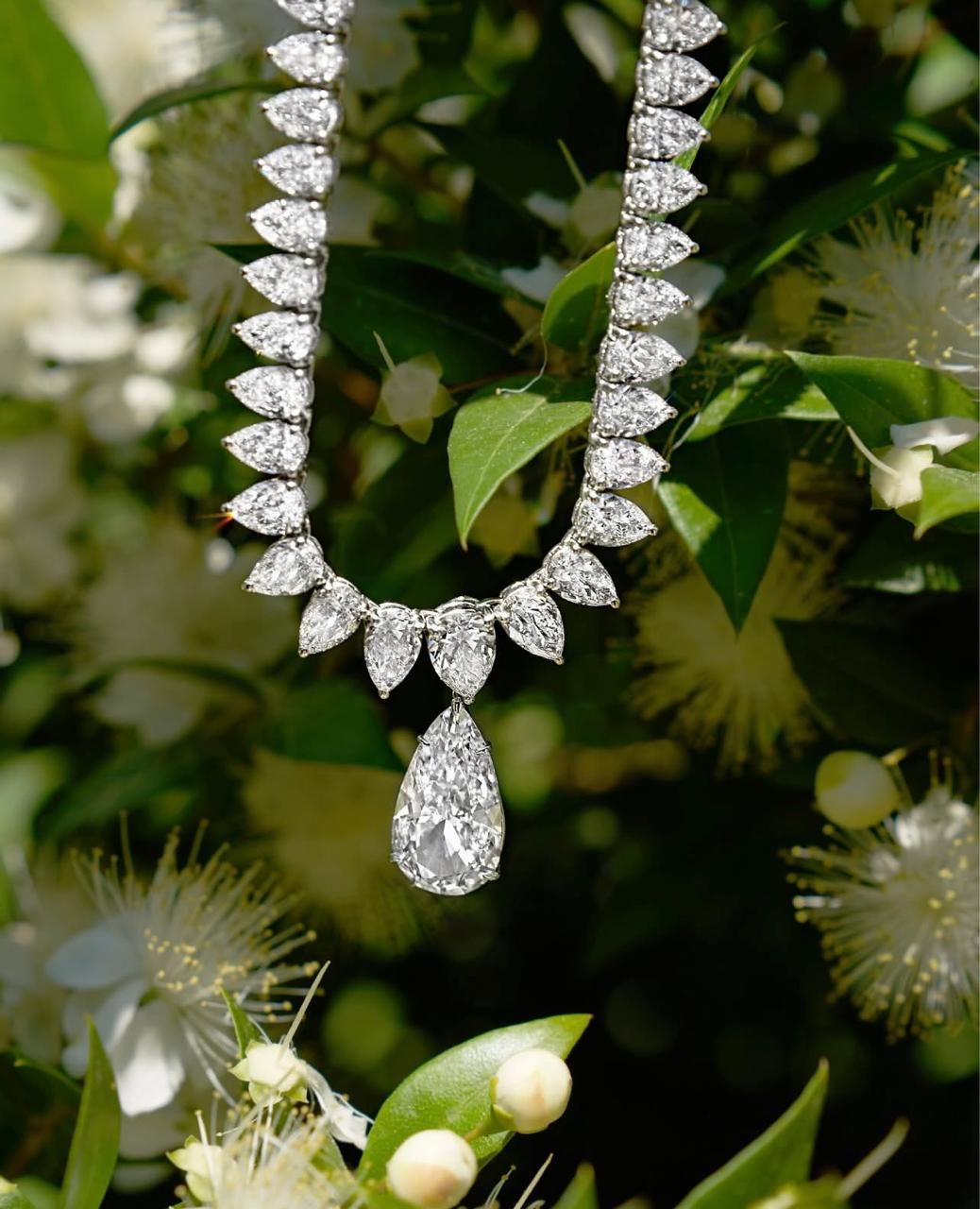
Diamonds
Know what you are choosing.
We give you enough knowledge to make an informed decision, and we guide you through the rest.
Chosen by eye. Proven on paper.
Certificates matter, and every diamond we supply has one from GIA or HRD. But a certificate describes a stone; it does not choose it. Two diamonds with identical grades can look different in the hand, and we select for the one that looks alive.
What follows is a short guide to the language of diamonds. It is here so that when we sit down together, you understand what you are seeing and can ask the questions that matter.
The 4Cs, and the fifth
Four measures. One stone.
Move the sliders. Each grade is explained in plain language, and the visual shows what changes.
Cut is what makes a diamond alive.
Cut describes the precision of the facets, not the shape. A well-cut stone returns light to the eye; a poorly cut one leaks it from the sides and bottom. Of the four Cs, cut has the greatest effect on how a diamond actually looks, and it is the one we are least willing to compromise on.
Colour is the absence of it.
Diamonds are graded from D, entirely colourless, down the alphabet as a faint warmth appears. Differences between neighbouring grades are subtle, and the metal of the setting changes how they read: a G stone in yellow gold looks white; the same stone in platinum shows a whisper of warmth.
Every diamond has a fingerprint.
Clarity records the natural characteristics inside and on the surface of a stone, seen under ten-times magnification. Most are invisible to the eye. What matters is where they are and whether they affect how the diamond looks or wears. We choose stones that are clean to the eye, and we show you exactly what the report describes.
Carat is weight, not size.
One carat is one fifth of a gram. Because price rises steeply at round numbers, a stone just under a carat can be excellent value and identical in appearance. Cut and shape decide how large a stone looks on the hand; two diamonds of the same weight can differ visibly in spread.
The fifth C.
Every diamond we supply is accompanied by an independent laboratory report, GIA or HRD, and by the Danelian Certificate, which records the stone, its mounting and our commitment to the piece.
- Independent grading of cut, colour, clarity and carat
- Laser inscription matched to the report
- The Danelian Certificate for the finished piece
Certificate
DANELIAN
Athens · Nikis 10
Shapes
The outline comes first.
-
Round
The most brilliant. The classic.
-
Oval
Brilliance in a longer line.
-
Emerald
Step-cut. Calm, architectural.
-
Cushion
A softened square, romantic.
-
Pear
A teardrop. Elegant in motion.
-
Marquise
Pointed at both ends. Lengthens the hand.
-
Princess
Square, sharp, contemporary.
-
Asscher
A square step-cut with deep corners.
How we select
What we insist on.
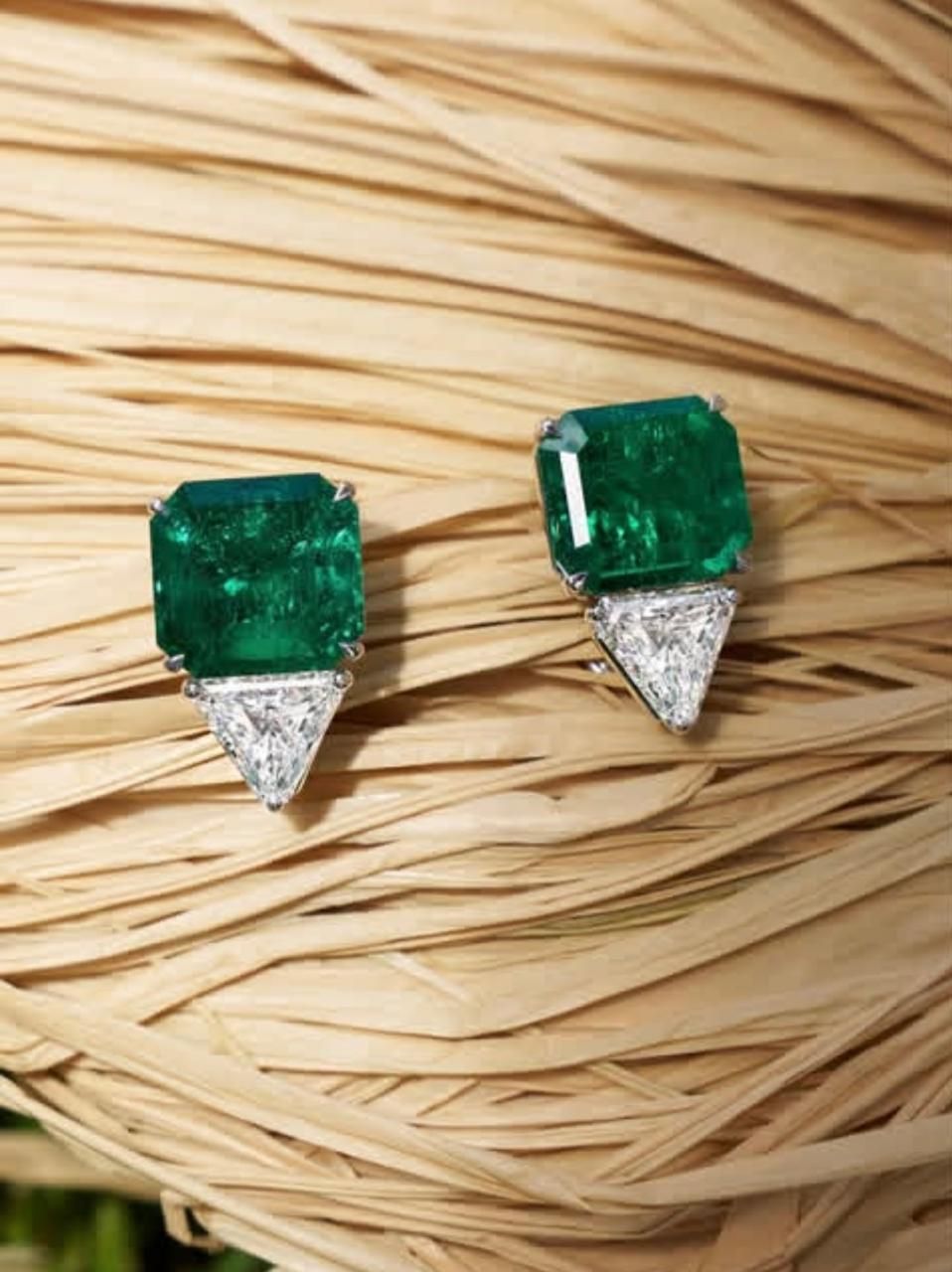
Independent certification
GIA or HRD reports for every diamond, with laser inscription matched to the paper.
Cut above all
For round brilliants we work almost exclusively in Excellent cut. It is the grade that decides how a stone lives.
Eye-clean, always
We do not sell stones with inclusions you can see. Clarity grades are explained in that light.
Honest about value
We will tell you when a lower grade is indistinguishable and the money is better spent on cut or size.
Responsible sourcing
Diamonds are sourced through established channels compliant with the Kimberley Process. We are happy to discuss provenance.
The Danelian Certificate
Our own document accompanies every piece: the stone, the mounting, and our commitment to its care.
Private appointment
Let us find the right piece together.
Whether you are choosing an engagement ring, looking for a gift or considering something entirely your own, our team would be delighted to assist you personally. In Athens, at Lagonissi, or by video from wherever you are.
- Athens appointment
- Virtual consultation
- General enquiry